
Welcome Spring! A Parent’s Guide to Tick Season in New Hampshire
Welcome Spring! As the snow melts across the Granite State, we celebrate the return of green grass, outdoor walks, and warmer playdates. However, the spring equinox also marks the onset of tick season in NH.
At WanderCare, we want your family to enjoy the outdoors with confidence. Here is everything you need to know about tick bites, Lyme disease prevention, and when to call your pediatrician or to call Wandercare for an urgent care visit!
1. You Found a Tick: Now What?
First, don't panic! Finding a tick is a common occurrence in NH. We help remove ticks nearly every day in Urgent Care!
Act fast: The risk of Lyme disease transmission is significantly lower if the tick is removed within 24–36 hours. This is why Dr Jo recommends daily tick checks for prevention!
Clean the area: After removal, wash the bite site and your hands with soap and water or rubbing alcohol.
Skip the "Tick Testing": You can place it in a sealed bag or tape it to a card if you want us to help identify it later, though testing the tick itself for diseases is not recommended for clinical decisions since Lyme is endemic in NH. We treat the patient, not the tick!
2. The "Q-Tip Method" for Gentle Tick Removal
If the idea of using tweezers on a squirmy toddler makes you nervous, try the Q-tip method. It’s a gentle way to encourage the tick to detach without the pinch AND it has the benefit of leaving no mouthparts behind!
The Technique: Dampen a cotton swab with water or liquid soap. Gently rub the tick in a circular motion for about a minute. The constant pressure usually causes the tick to back out on its own without leaving any mouthparts behind.
See it in Action: Video below!
If you cannot remove the tick yourself: Text Wandercare for an urgent care appointment and we will help you remove it! 603-506-4919
3. When is Prophylaxis (Preventative Antibiotics) Needed?
We may prescribe a single dose of antibiotic (doxycycline) to prevent Lyme disease, but only if ALL of these conditions are met:
The tick is identified as a deer tick (blacklegged tick)
You were bitten in a high-risk area (like New Hampshire)
The tick was attached for at least 36 hours (it will look swollen/engorged)
The tick was removed within the last 72 hours
If any of these conditions are not met, antibiotics are not recommended. Instead, watch for symptoms of Lyme disease.
Note: Doxycycline is safe for a single "preventative" dose in children of all ages.
4. Is it a Deer Tick? Identification Tips
Deer ticks (also called blacklegged ticks) are the only ticks that spread Lyme disease in our area. They are very small:
Nymphs (young ticks) are the size of a poppy seed
Adult females have a reddish-orange body with a dark shield on the back
Adult males are entirely dark brown to black
Deer ticks are much smaller than dog ticks or lone star ticks. Because nymphs are so tiny, they often go unnoticed and cause most Lyme disease cases.
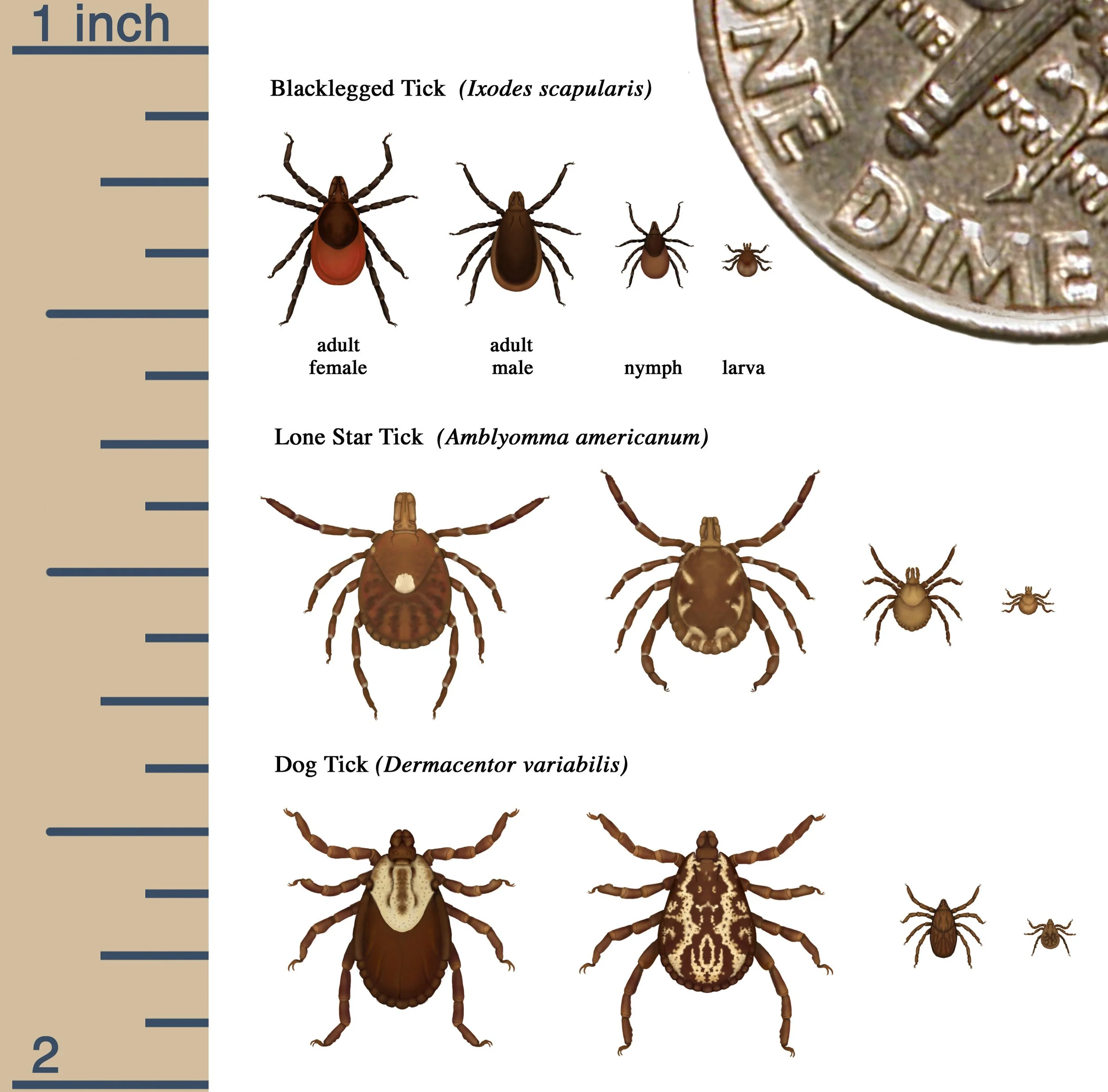
CDC- Tick identification
5. Signs of Acute Lyme Disease
Watch for these symptoms in the 3-30 days after a tick bite:
The Rash (Erythema Migrans):
Appears in 70-80% of people with Lyme disease (~90% in children)
Red, expanding rash at the tick bite site
Usually at least 2 inches (5 cm) across
May have a "bull's-eye" appearance, but often just looks like a solid red circle
Usually not itchy or painful
May feel warm to the touch but often does not
Other Early Symptoms (flu-like illness without the cough and congestion):
Fever and chills
Headache
Neck stiffness
Fatigue
Muscle and joint pain
Swollen lymph nodes
The Good News: If caught at this early stage, Lyme disease is highly treatable and curable with a standard course of antibiotics. Most patients recover completely and quickly.
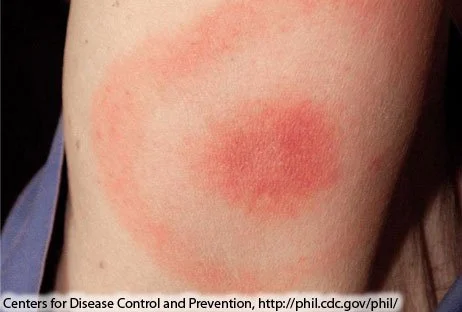
Classic Bulls Eye Rash - Erythema Migrans
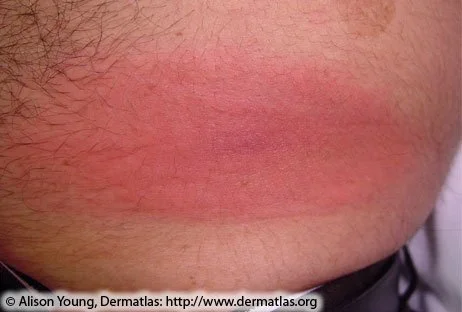
Lyme rash without clearing
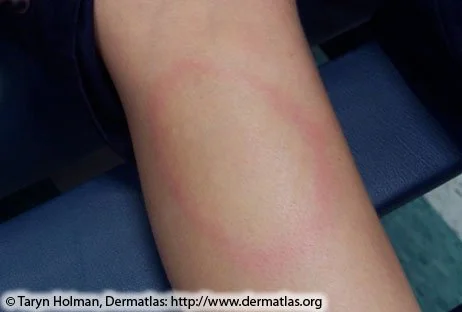
Expanding rash with central clearing
6. Why We Don't Test for Early Lyme
Parents often ask for a blood test immediately after a bite. However, serology (blood work) will be negative in the early stages. The test looks for antibodies, which your body takes up to 6 weeks to produce. If you or your child has the classic bullseye rash in NH (or develops the flu-like illness outside of flu season), we diagnose and treat them based on that clinical sign alone—waiting for a test would only delay healing. A negative test in the first few weeks is meaningless and can provide a false sense of security.
7. Prevention: DEET and Permethrin
The best defense is a good offense!
For the Skin: Use a repellent with 20-30% DEET. It is safe for children over 2 months old when applied correctly.
For the Gear: Permethrin is your secret weapon. Spray it on sneakers, socks, and outdoor clothes. It stays effective through several washes and actually kills ticks on contact. Wear light clothing so you can see the ticks and tuck pantlegs into socks.
The Nightly Check: Make "tick checks" part of the bedtime routine. Focus on "hot spots" like behind the ears, the scalp, armpits, and behind the knees.
